
Corrosion Inhibitors Market Size, Share, Trends and Growth Report – Global Opportunities & Forecast, 2026-2033
Corrosion Inhibitors Market Overview
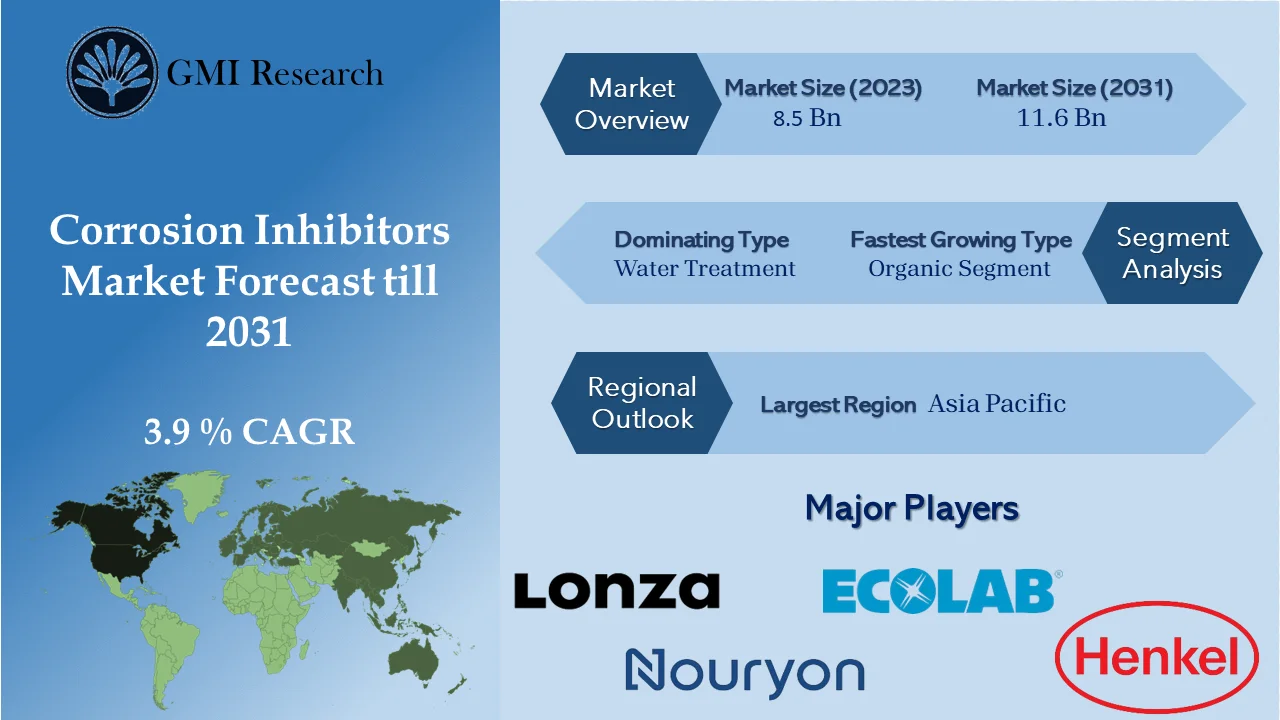
Corrosion Inhibitors Market size reached USD 9.2 billion in 2025 and is estimated to reach USD 12.5 billion in 2033 and the market is estimated to grow at a CAGR of 3.9% from 2026-2033.The market growth is driven by increasing oil and gas exploration and production activities, rising global investments in water and wastewater treatment infrastructure, and rapid industrialization and infrastructure development across emerging economies. These trends are increasing the demand for corrosion protection solutions to enhance equipment durability, operational efficiency, and asset lifespan across various industries.
Market Size & Forecast:
-
- 2025 – USD 9.2 Billion
- 2033 – USD 12.5 Billion
- Market Forecast – CAGR of 3.9% from 2026-2033
Key Segment Insights:
-
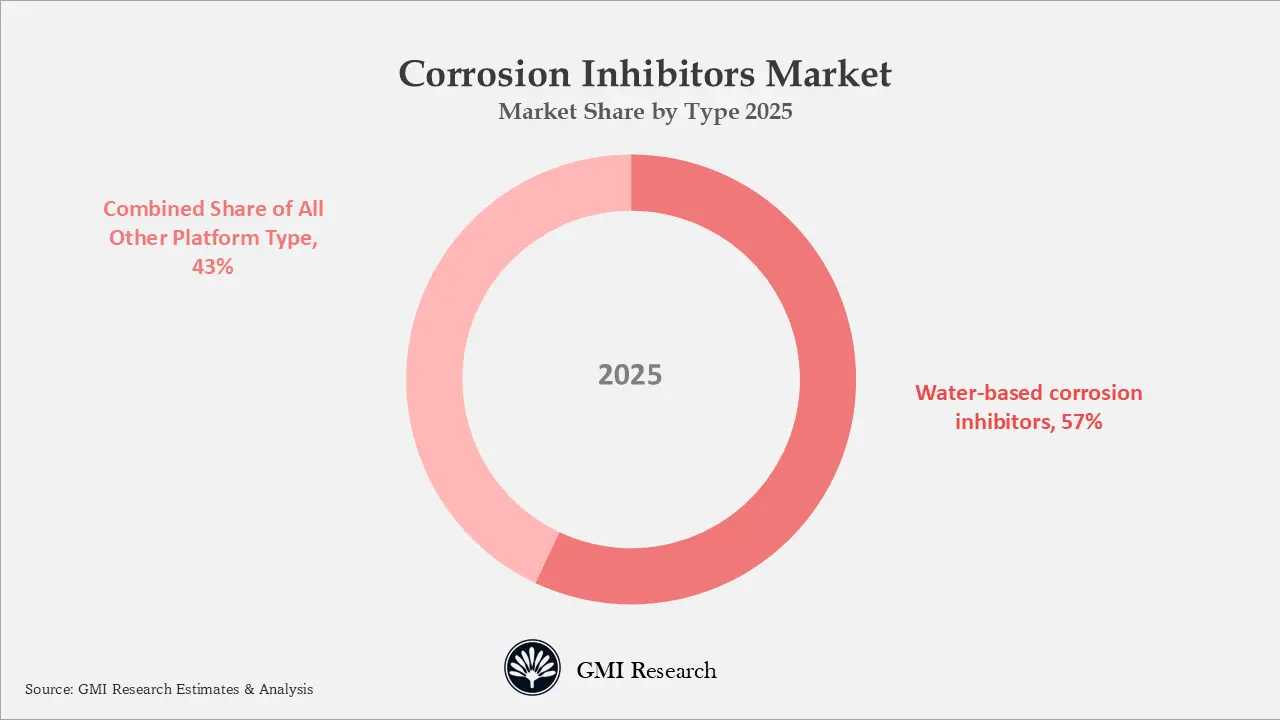
- Corrosion Inhibitor Type Insights: Water-based corrosion inhibitors dominated the market, accounting for 57% of the global market share in 2025.
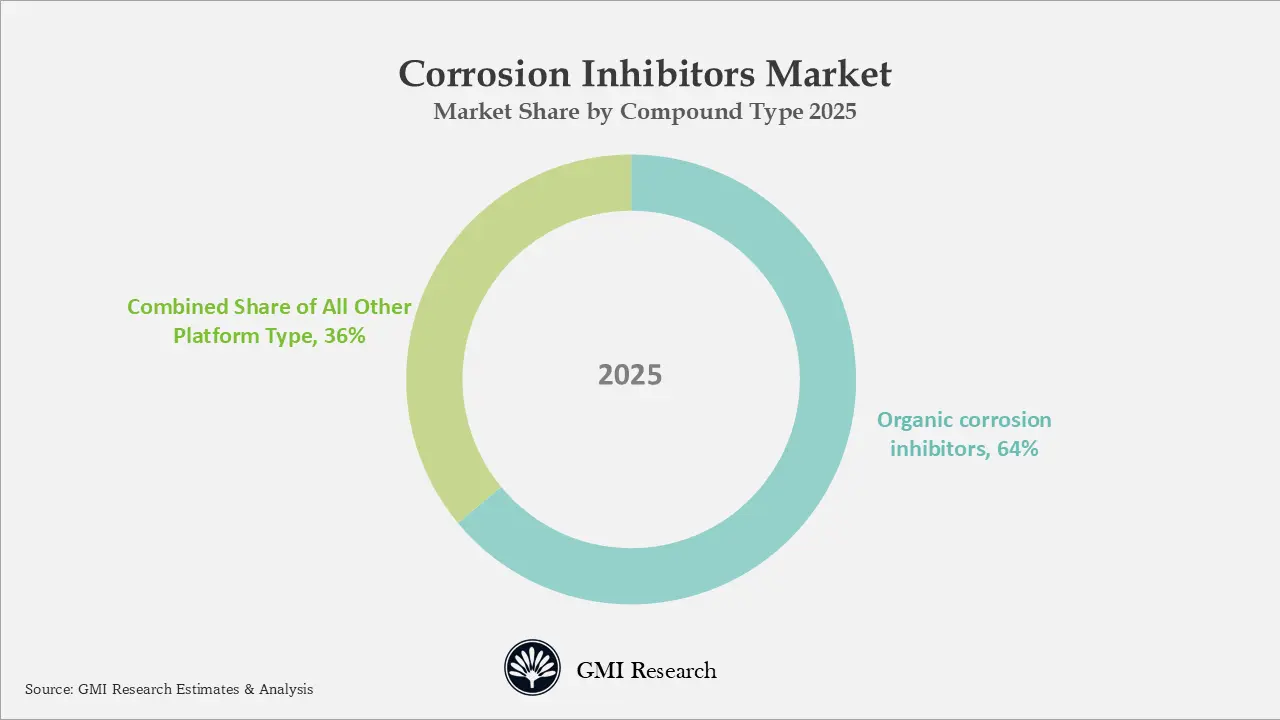
- Compound Type Insights: Organic corrosion inhibitors held the largest share, capturing 64% of the market in 2025.
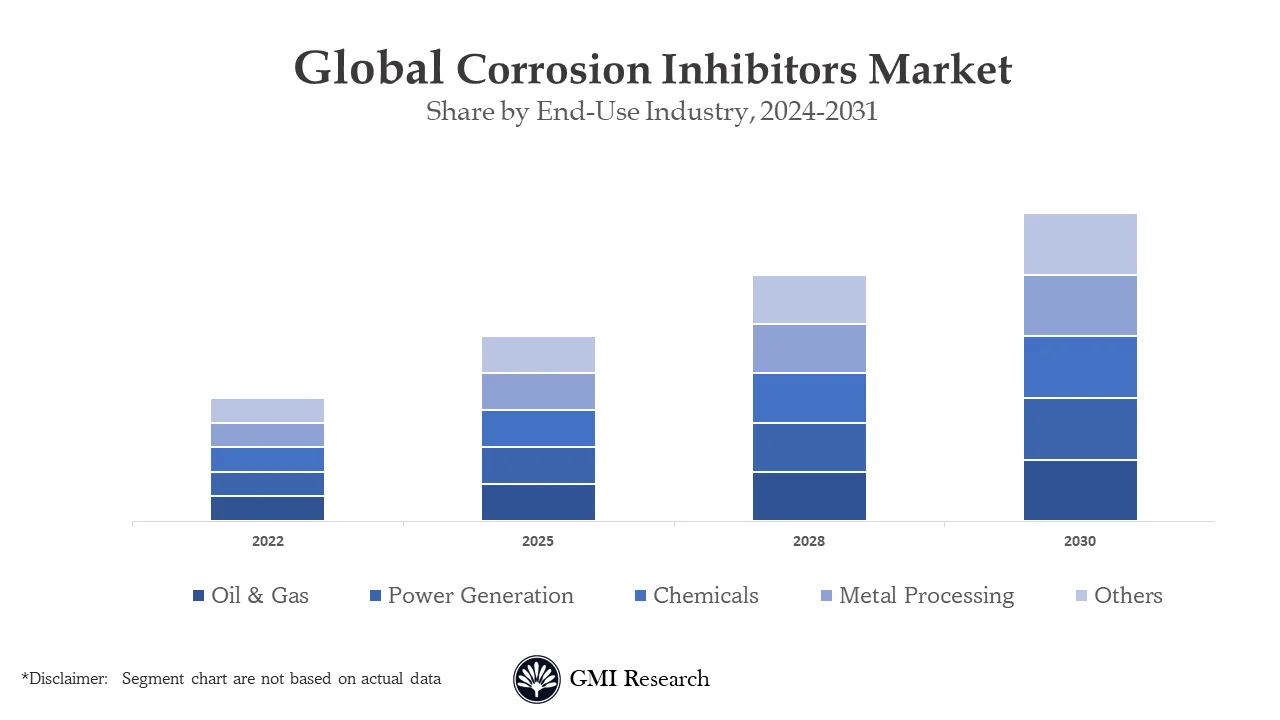
- End-Use Industry Insights: The oil & gas and refinery sector represented 34% of the global market share in 2025 and is expected to witness strong growth.
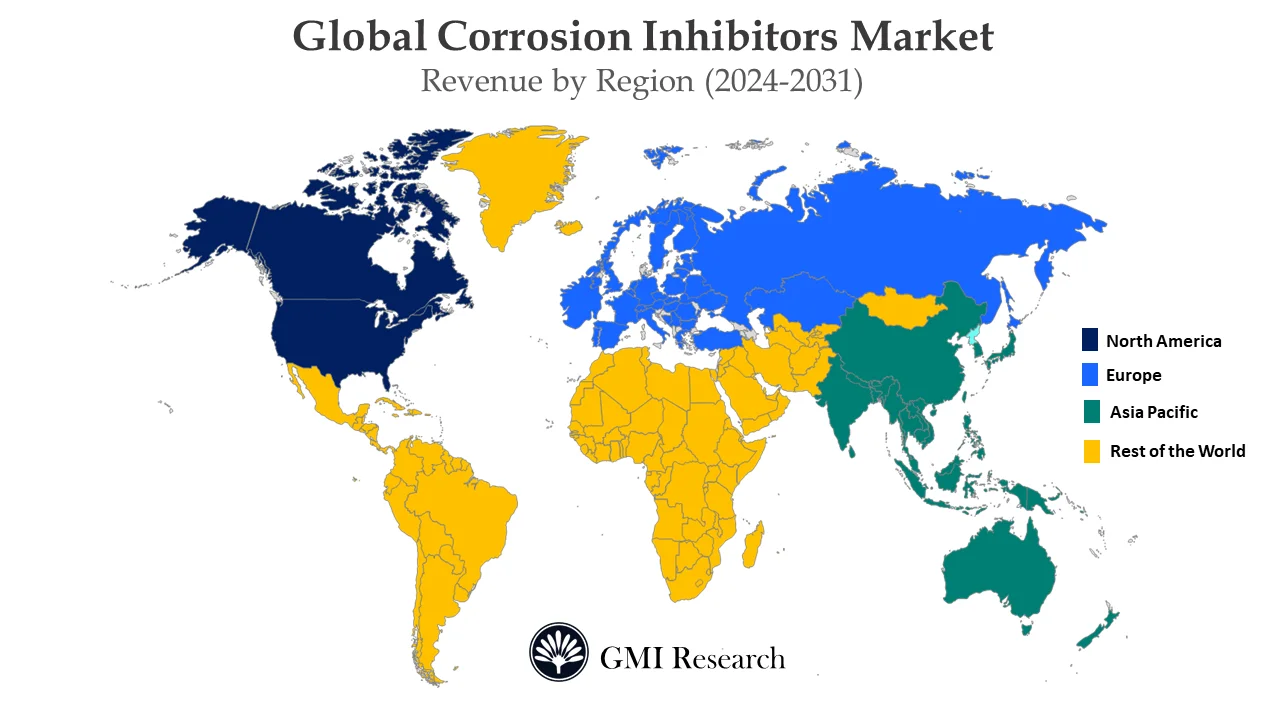
- Regional Insights: Asia Pacific led the global market, accounting for 40% of the market share in 2025.
Corrosion Inhibitors Market Growth Drivers
Increasing Oil & Gas Exploration and Production
Increases demand for corrosion inhibitors to protect pipelines, drilling equipment, refineries, and storage facilities, driving market growth. Whereas, NACE International reports that the oil and gas industry faces an annual corrosion cost of nearly USD 27 billion in the US individually. Employing corrosion-resistant materials extensively and implementing corrosion-related techniques has the potential to lower expenses. The use of corrosion inhibitors is one method to diminish or prevent metal corrosion. Moreover, insulating metals and alloys or slowing down corrosion arising from cathodic and anodic procedures serves as protection for them. Integrating corrosion inhibitors in these sectors not only reduces maintenance and repair expenditures but also extends equipment lifespan and decreases production losses attributed to corrosion. Therefore, corrosion inhibitors limit complete corrosion costs. The rising number of oil & and gas and power generation projects is predicted to significantly foster the demand for organic corrosion inhibitors. Consequently, the growth in these segments is predicted to drive the organic corrosion inhibitors market size in the forecast period.
Growing Investments in Water and Wastewater Treatment Globally
Freshwater resources constitute only 2.5% of the total global water resources, posing a significant challenge in supplying water for industrial and domestic use. The increasing difference between water demand and supply emphasizes the need for efficient recycling, achievable through proper treatment processes. Corrosion inhibitor market is witnessing rapid growth in water treatment sectors globally. Industrial producers, being the largest consumers of corrosion inhibitors, are actively searching for more effective inhibitors to decrease equipment repair downtime. The growing demand for corrosion inhibitors in different industries such as chemical processing, metals, petroleum, oil & gas, and pulp & paper especially in emerging countries, has increased. Cool water is predicted to be the largest segment for corrosion inhibitors in water treatment procedures, preventing metal machinery from the effects of water flow.
Rapid Industrialization and Infrastructure Development
Industrial sectors accounted for 20.9% of the global economy and grew by 2.5% in 2024, according to the United Nations. Manufacturing remained the dominant driver of industrial output, The industrial landscape is shifting toward Asia and Oceania, while medium- and high-technology industries now account for over half of global manufacturing value added, outperforming lower-technology industries.The rapid development and growth of industries are driving the global corrosion inhibitors market size.
In addition, the anticipated infrastructural development in economies like South Korea, India, China, and Brazil is predicted to drive industrial activities and contribute to the economic growth of these countries. The growth in infrastructure, particularly in electricity, construction sectors, clean water, transportation, and fuel, is predicted to foster the market for corrosion inhibitors in the coming years. Global infrastructure spending is projected to reach USD 94 trillion by 2040, with an additional USD 3.4 trillion required to achieve the United Nations’ Sustainable Development Goals for electricity and water, as stated by Oxford Economies.
Countries across the Asia Pacific, including India, Malaysia, Vietnam, Thailand, the Philippines, China, and Indonesia, are likely to be among the fastest growing in terms of infrastructure investment, as anticipated by an Oxford Economics study. This trend has contributed to the growing usage of industrial water in emerging countries. The surge in infrastructure development presents an opportunity for producers to provide a variety of corrosion inhibitors personalized to precise applications, ensuring an effective shield against corrosion.
Challenges Faced by Corrosion Inhibitors Companies
Meanwhile, the growing usage of corrosion-resistant alloys predicts a limitation on corrosion inhibitors market growth. These alloys are intentionally designed utilizing elements inherently resistant to corrosion in different environments. Comprising two or more metals, they are often united with non-metal, and they are often linked with non-metal elements like sulfur and carbon. The mixture of different components leads to a material with exclusive properties that are not present in any separable element alone. The improved corrosion resistance of alloys can be accredited to the creation of a defensive layer on their surface. The protective coating functions as a barrier, preserving the alloy from the damaging effects of moisture and oxygen, which can cause corrosion in pure metals. In addition, this protective layer helps prevent electrolysis, another prevalent cause of metal degradation and wear, which could potentially limit the market growth in terms of revenue.
Corrosion Inhibitors Market Segment Analysis
Corrosion Inhibitors Market Type Insights: Water-based corrosion inhibitor dominates the market and captures a market share of 57% in 2025.
Water based corrosion inhibitors market constituted the majority share and were projected as the dominant type in the global corrosion inhibitor market. These inhibitors alter the properties of metal surfaces, diminishing their vulnerability to oxidation and the formation of corrosion. Water-based inhibitors are commonly marketed in concentrated form and are diluted with water for cost-effectiveness compared to many oil/solvent-based products. Different application methods, such as brush, spray, or immersion, are employed for the effective usage of these inhibitors. Water-based inhibitors offer a cleaner application experience and alleviate concerns connected to solvent fumes. Their effectiveness in safeguarding corrosion can extend over considerable periods, varying from weeks to months, delivered they are stored under suitable plant conditions and protected during shipping.
Compound Type Market Insights: Organic inhibitor market hold the largest market share of 64% in 2025
Organic corrosion inhibitors market is predicted to witness to drive the global market of corrosion inhibitors. It is renowned for its effectiveness in a wide temperature variety, cost-effectiveness, good solubility with water, and compatibility, these compounds feature double bonds with nitrogen, sulfur atoms, and oxygen. The absorption process in organic inhibitors is driven by the discrete pair electrons of atoms, representing a hybrid of physical and chemical adsorption. The chemical structure, charge distribution, surface charge, nature, within the molecule, and the characteristics of aggressive media are essential in influencing and shaping the adsorption procedure of organic inhibitors.
Corrosion Inhibitors Market by End Use industry Insights: Oil & gas and refinery industry accounted for 34% of the global market share in 2025 and is expected to exhibit the robust market growth
The oil & gas segment profoundly influences a country’s GDP given its economic significance and substantial scale. Within this industry, corrosion inhibitors are extensively used, specifically for routine functions involving equipment such as vessels, subsea, and pipeline equipment. These inhibitors are essentially productive in different applications including transportation and storage, refining and petrochemical, and exploration and production.
In the power generation industry, corrosion inhibitors protect critical equipment such as boilers, condensers, heat exchangers, and turbine components from corrosion caused by high temperatures, steam, oxygen, and chemically aggressive environments. Inorganic inhibitors, particularly phosphates, silicates, and sulfites, are widely used to prevent general and localized (pitting) corrosion, improving equipment reliability, efficiency, and service life.
Water-based corrosion inhibitors are chemical additives used to prevent corrosion, rust, and scale formation in water systems such as cooling towers, boilers, and pipelines. They protect metal surfaces by forming a thin protective film or neutralizing corrosive agents like dissolved oxygen. Phosphate-based inhibitors, particularly those containing orthophosphate (PO₄³⁻), are among the most widely used in water treatment applications.
Automotive corrosion inhibitors are chemical additives and protective coatings designed to prevent rust and corrosion in metal components such as engine blocks, radiators, chassis, and body panels. They protect these parts by forming a thin chemical barrier or through electrochemical reactions that block moisture, oxygen, salts, and other corrosive agents, thereby extending vehicle durability and performance. The most commonly used inorganic corrosion inhibitors in the automotive industry are phosphates, borates, and molybdates, which provide effective protection against corrosion caused by engine coolants, brake fluids, and other automotive operating environments. Inorganic inhibitors usage across various industries are driving growth of inorganic corrosion inhibitors market.
Regional Market Insights: Asia Pacific hold 40% of the global market share in 2025
The Asia Pacific regional market growth is attributed to the rise in industrialization in developing nations. Rapid industrialization increases the need for different end-use industries such as power generation. In emerging countries of the APAC region, developing metalworking and chemical industries are also predicted to lead the Asia Pacific corrosion inhibitors market growth. In addition, primary drivers include growing environmental concerns, a rise in numbers of population, and an increase in industrial growth are propelling the need for water treatment chemicals across the Asia Pacific region are smoothly fostering the corrosion inhibitors market growth. China is the largest consumer of corrosion inhibitor globally and also captures around 40% of the demand of Asia Pacific corrosion inhibitors market. India corrosion inhibitors market is projected to grow at a robust rate during the forecast period owing to heavy investments in infrastructure, expanding oil and gas refineries, rapid industrialization, and massive water treatment projects.
Corrosion Inhibitors Market Major Players & Competitive Landscape
Several leading companies are Ecolab, BASF, Solenis, Nouryon, Baker Hughes Company, Ashland Chemicals, SUEZ S,A, DOW Chemical Company, Nouryon, Nemours, Baker Hughes, Henkel Ibérica S.A, Lanxess, Henkel Corporation among others.
Key Corrosion Inhibitors Market Developments
-
- In July 2024, Daubert Cromwell introduced Premium Metal-Guard® VCI/ESD, a dual-function packaging film that combines volatile corrosion inhibitor (VCI) technology with electrostatic dissipative (ESD) protection to safeguard metal and static-sensitive components during storage and transportation.
- In 2021, BASF SE launched an innovative and new variety of corrosion inhibitors for the industry of oil & gas to deliver durable shield against corrosion in harsh surroundings.
Corrosion Inhibitors Market Scope of the Report
|
Report Coverage |
Details |
| Market Size Value in 2025 |
USD 9.2 billion |
| Market Revenue Forecast in 2033 |
USD 12.5 billion |
| CAGR |
3.9% |
| Market Base Year |
2025 |
| Market Forecast Period |
2026-2033 |
| Base Year & Forecast Units |
Revenues (USD Billion) |
| Market Segment | By Compound, By Type, By End-Use Industry, By Region |
| Regional Coverage | Asia Pacific, Europe, North America, and RoW |
| Companies Profiled | Ecolab, BASF, Solenis, Nouryon, Baker Hughes Company, Ashland Chemicals, SUEZ S,A, DOW Chemical Company, Nouryon, Nemours, Baker Hughes, Henkel Ibérica S.A, Lanxess, Henkel Corporation among others; a total of 10 companies covered. |
| 25% Free Customization Available | We will customize this report up to 25% as a free customization to address our client’s specific requirements |
Corrosion Inhibitors Market Research Report Segmentation
The global Corrosion Inhibitors market has been segmented on the basis of Compound, Type, End-Use Industry and regions. Based on Compound, the market is segmented into Organic corrosion inhibitors and Inorganic corrosion inhibitors. Based on Type, the market is segmented into Water-based, Corrosion Inhibitors, Oil-based Corrosion Inhibitors and Volatile Corrosion Inhibitors. Based on End-Use Industry the market is Segmented into Water Treatment, Building and Construction, Automotive, Oil and Gas, Power Generation, Chemicals, Metals Processing, Pulp and Paper, and Others.
Global Corrosion Inhibitors Market by Compound
-
- Organic corrosion inhibitors
- Inorganic corrosion inhibitors
Global Corrosion Inhibitors Market by Type
-
- Water-based Corrosion Inhibitors
- Oil-based Corrosion Inhibitors
- Volatile Corrosion Inhibitors
Global Corrosion Inhibitors Market by End-Use Industry
-
- Water Treatment
- Building and Construction
- Automotive
- Oil and Gas
- Power Generation
- Chemicals
- Metals Processing
- Pulp and Paper
- Others
Global Corrosion Inhibitors Market by Region
-
-
North America Corrosion Inhibitors Market
- US Market
- Canada Market
-
Europe Corrosion Inhibitors Market
- UK Market
- Germany Market
- France Market
- Spain Market
- Rest of Europe Market
-
Asia-Pacific Corrosion Inhibitors Market
- China Market
- India Market
- Japan Market
- Rest of APAC Market
-
RoW Corrosion Inhibitors Market
- Brazil Market
- South Africa Market
- Saudi Arabia Market
- UAE Market
- Rest of world (remaining countries of the LAMEA region) Market
-
Major Players Operating in the Corrosion Inhibitors Market
-
-
Ecolab
-
BASF
-
Solenis
-
Nouryon
-
Baker Hughes Company
-
Ashland Chemicals
-
SUEZ S.A.
-
DOW Chemical Company
-
Nemours
-
Baker Hughes
-
Henkel Ibérica S.A.
-
Lanxess
-
Henkel Corporation
-
Frequently Asked Question About This Report
Corrosion Inhibitors Market [UP2226-001001]
According to GMI Research analyst, Corrosion Inhibitors Market size was estimated at USD 9.2 billion in 2025.
Corrosion Inhibitors Market size reached USD 9.2 billion in 2025 and is estimated to reach USD 12.5 billion in 2033 and the market is estimated to grow at a CAGR of 3.9% from 2026-2033.
GMI Research believes the Corrosion Inhibitors Market has room for substantial growth and the market size is estimated to reach USD 12.5 billion in 2033 and the market is estimated to grow at a CAGR of 3.9% from 2026-2033.
Major players capturing significant market share are Ecolab, BASF, Solenis, Nouryon, Baker Hughes Company, Ashland Chemicals, SUEZ S,A, DOW Chemical Company, Nouryon, Nemours, Baker Hughes, Henkel Ibérica S.A,, Lanxess, Henkel Corporation among others.
Asia Pacific dominated the global corrosion inhibitors market, accounting for approximately 40% of the market share in 2025. The region’s growth is driven by rapid industrialization, infrastructure development, and expanding demand from key end-use industries such as power generation, oil & gas, metalworking, and chemicals. Increasing industrial activities and the growth of manufacturing sectors in emerging economies are expected to further strengthen the region’s leadership in the corrosion inhibitors market.
Oil & gas and refinery industry accounted for 34% of the global corrosion inhibitors market share in 2025 and is expected to witness strong growth during the forecast period. The segment remains a major contributor to market demand due to the critical role of corrosion protection in maintaining operational efficiency and extending the lifespan of assets. Corrosion inhibitors are widely used in vessels, subsea equipment, pipelines, and processing units across applications such as transportation and storage, refining and petrochemicals, and exploration and production activities.
Water-based corrosion inhibitors dominated the global market, accounting for approximately 57% of the market share in 2025. Their widespread adoption is attributed to their effectiveness, environmental advantages, and extensive use across applications such as water treatment, oil & gas, and industrial systems. These inhibitors protect metal surfaces by forming a protective film that reduces oxidation, minimizes corrosion reactions, and enhances equipment durability.
Global corrosion inhibitors market is driven by increasing oil and gas exploration and production activities, growing global investments in water and wastewater treatment infrastructure, and rapid industrialization and infrastructure development across emerging economies. These trends are accelerating the demand for advanced corrosion protection solutions to improve equipment durability, enhance operational efficiency, and extend asset service life across diverse industries.
China is the largest consumer of corrosion inhibitors globally and accounts for approximately 40% of the Asia Pacific market demand. The country’s dominance is driven by rapid industrialization, expanding manufacturing activities, and strong demand from key sectors such as oil & gas, chemicals, power generation, and water treatment. Meanwhile, the India corrosion inhibitors market is expected to grow at a robust pace during the forecast period, supported by significant infrastructure investments, expansion of oil and gas refineries, accelerating industrial development, and large-scale water and wastewater treatment projects.
Related Reports
Why GMI Research